FullStory
Driving Collaboration With FullStory @mentions
- Role
- Lead Product Designer
- Scope
- Ideation workshops, customer interviews, prototypes, design iteration, implementation support
- Industry
- Analytics, session replay, B2B SaaS
- Increased usage of Notes and sharing workflows.
- Boosted session views from collaboration and notification paths.
- Created a foundation for future invitation and collaboration improvements.
Project Overview
FullStory is a session replay and analytics platform. On the product-led growth team, we were focused on helping customers build a stronger habit of watching sessions and collaborating around what they found.
The hypothesis was simple: an account with 15 engaged users would be stickier than one used by only two or three people. More collaboration meant more people seeing value, more session views, and better seat utilization.
As the sole product designer on the team, I led the design effort to increase collaborative behavior through the product.
The Challenge
This work sat inside a broader retention and product-stickiness OKR. We wanted to:
- Foster session-watching habits inside organizations.
- Improve usage of available account seats.
- Drive collaboration through Notes and sharing features.
- Encourage inviting new users into relevant product moments.
Through workshops and customer conversations, we identified Notes as a strong lever. Notes allowed users to comment on specific points in a replay, but the feature was underused and did not yet create enough momentum across teams.
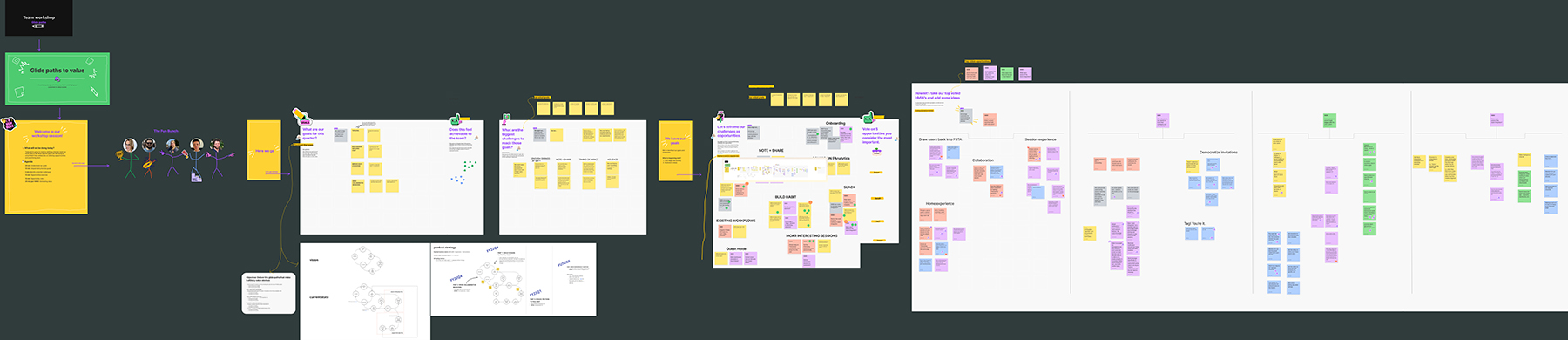 Ideation workshop in FigJam.
My Role
I led product design across the discovery, prototyping, and implementation phases:
- Facilitated ideation workshops with product, engineering, and stakeholders.
- Conducted customer interviews to validate collaboration hypotheses.
- Designed and iterated prototypes based on internal and external feedback.
- Worked with growth engineers during implementation to keep the new patterns aligned with the design system.
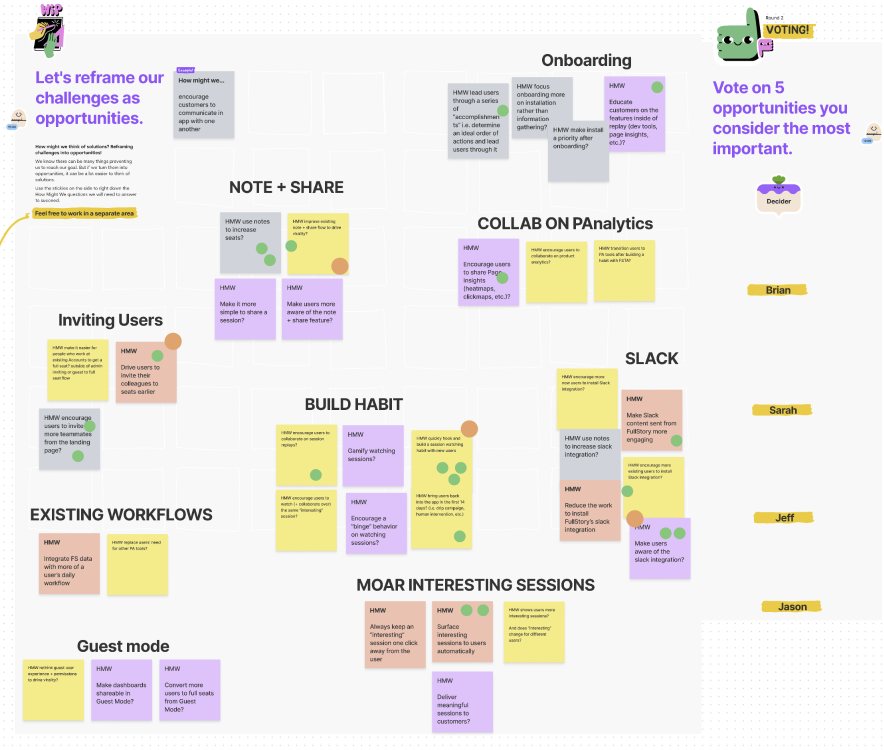 An exercise I led where we narrowed in on opportunities.
Research And Insights
Customer interviews and session observations showed that Notes had clear collaborative potential, but users were not consistently discovering or using it. We also found friction for guest users entering the platform from shared sessions or collaboration paths.
The opportunity was to make the moment of collaboration more direct. Instead of asking users to create a note and separately share it, the product could let them pull teammates into the exact point of interest.
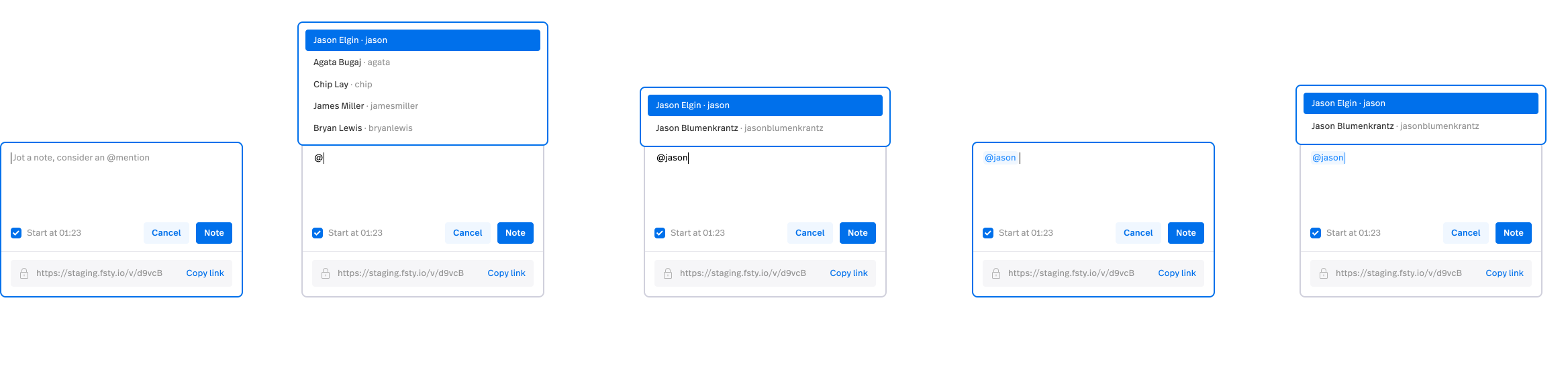 Prototyped variations and states. These designs reflect an in-flux change to our design system at the time.
Ideation And Prototyping
The concept emerged from an ideation workshop, then moved through multiple prototype iterations. I tested those directions in design studios and customer interviews, looking for ways to improve collaboration without forcing a large UI overhaul.
The design needed to feel native to the existing Notes experience. It also had to work across notification surfaces that customers already used, including Slack, Trello, and Microsoft Teams.
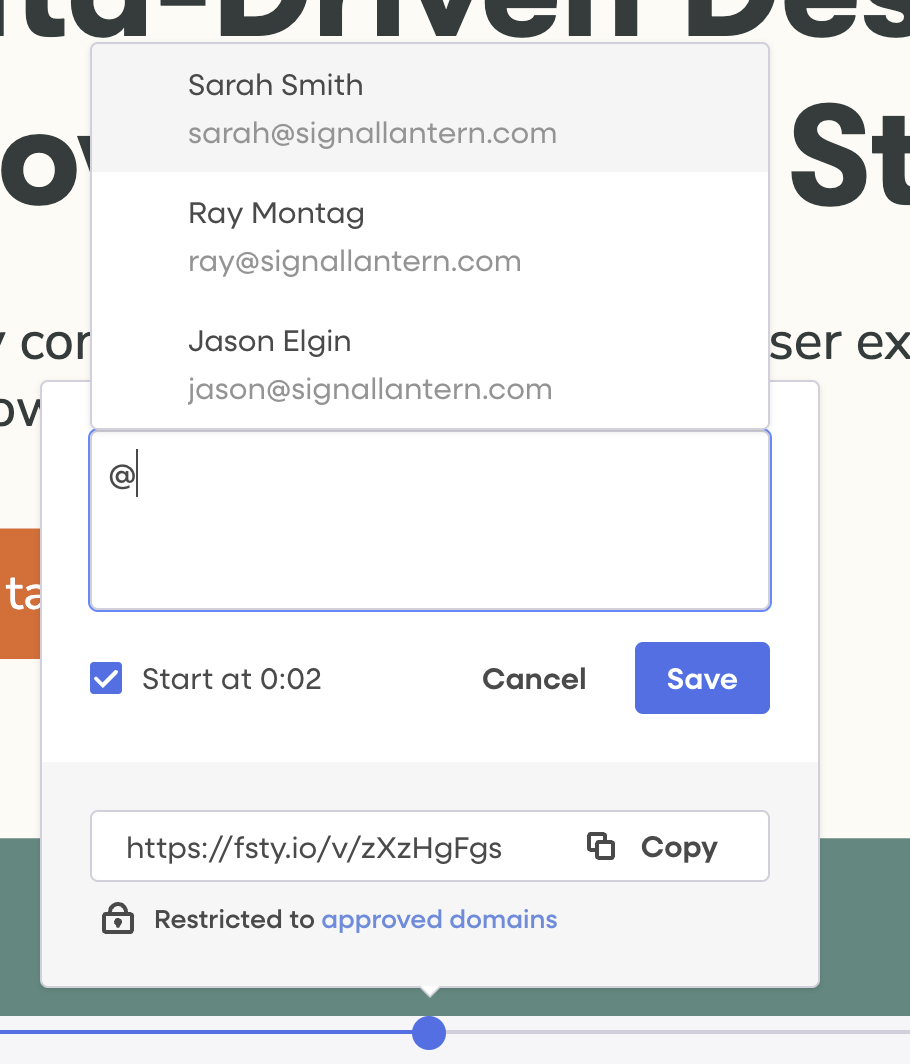 Our final design and implementation.
Solution
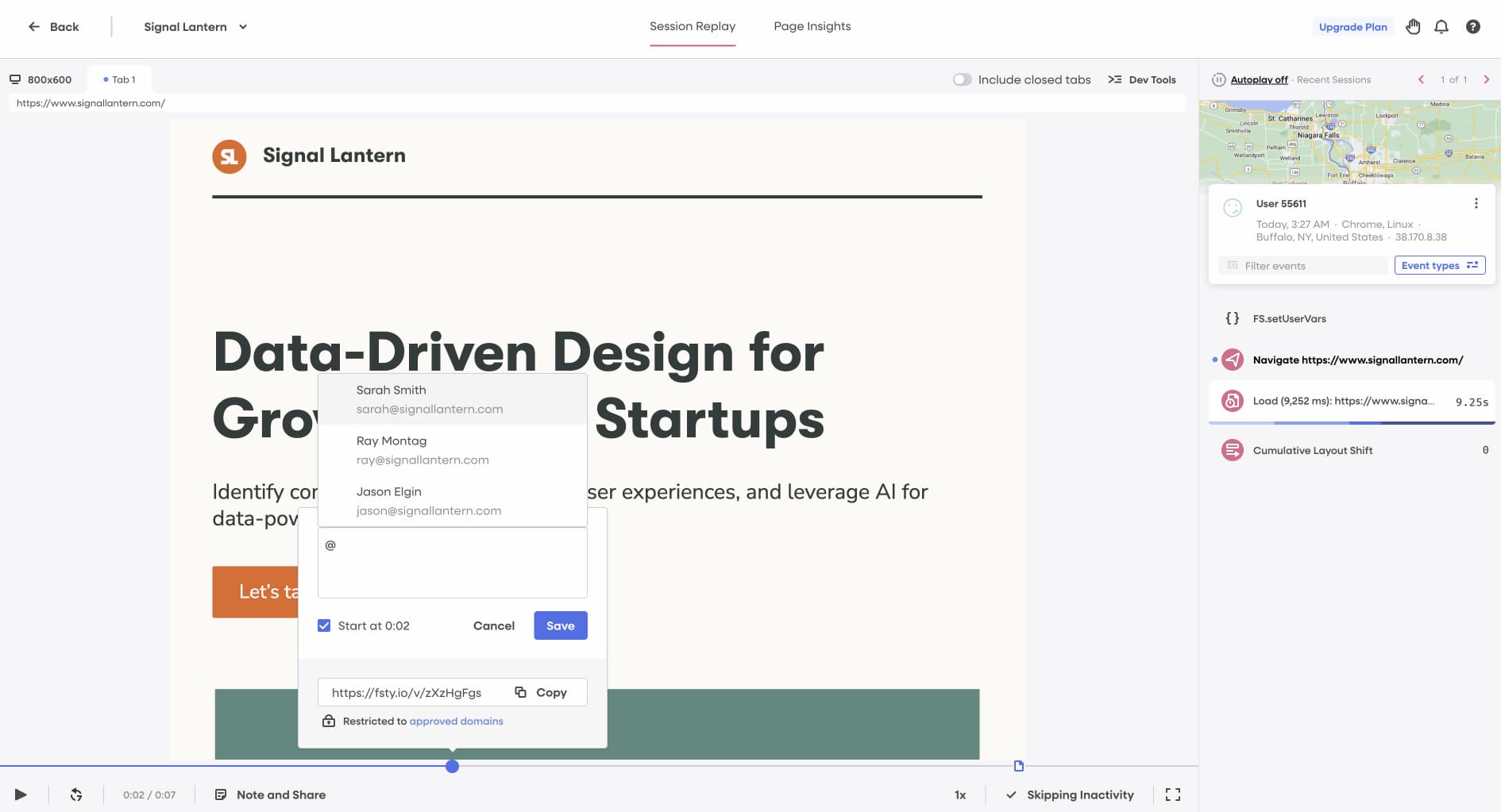
We introduced @mentions inside Notes. Users could tag teammates directly in a note attached to a specific moment in a session replay. The mentioned teammate would receive a notification through connected tools, giving them a direct path back to the relevant session context.
This made sharing more precise and lowered the effort required to bring another person into an insight. It also turned collaboration tools into a new route for session views.
Result And Impact
After launch, we saw increased use of Notes and sharing, along with a meaningful lift in session views from collaboration paths. Feedback was positive, and customers quickly suggested useful extensions, including inviting new users through the @mention flow.
Those suggestions informed later iterations and validated the broader direction: targeted collaboration features could increase product value without requiring a major redesign.
Reflection
This project reinforced the value of cross-functional ideation. Some of the most useful ideas came from engineering teammates, which made the early workshops especially valuable.
It also sharpened my approach to stakeholder preparation. The workshops were more productive when I spent time with individuals beforehand, understood their constraints, and brought clear prompts into the room.
The biggest lesson was that fast, focused testing can turn a broad growth goal into a concrete product improvement. Collaboration was the strategy, but @mentions gave users a specific behavior they could adopt.